Nigeria
The giant spirit of Africa
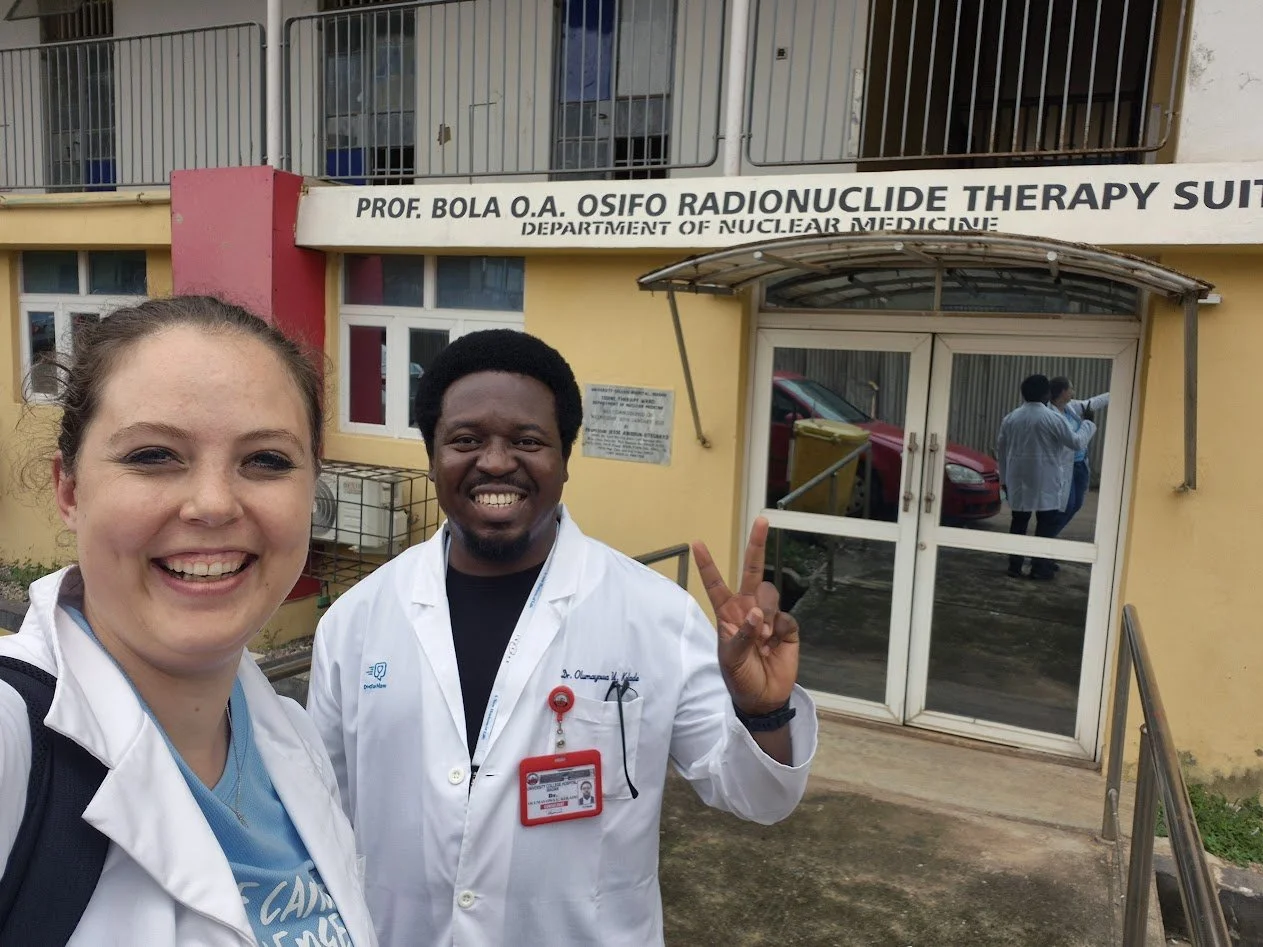
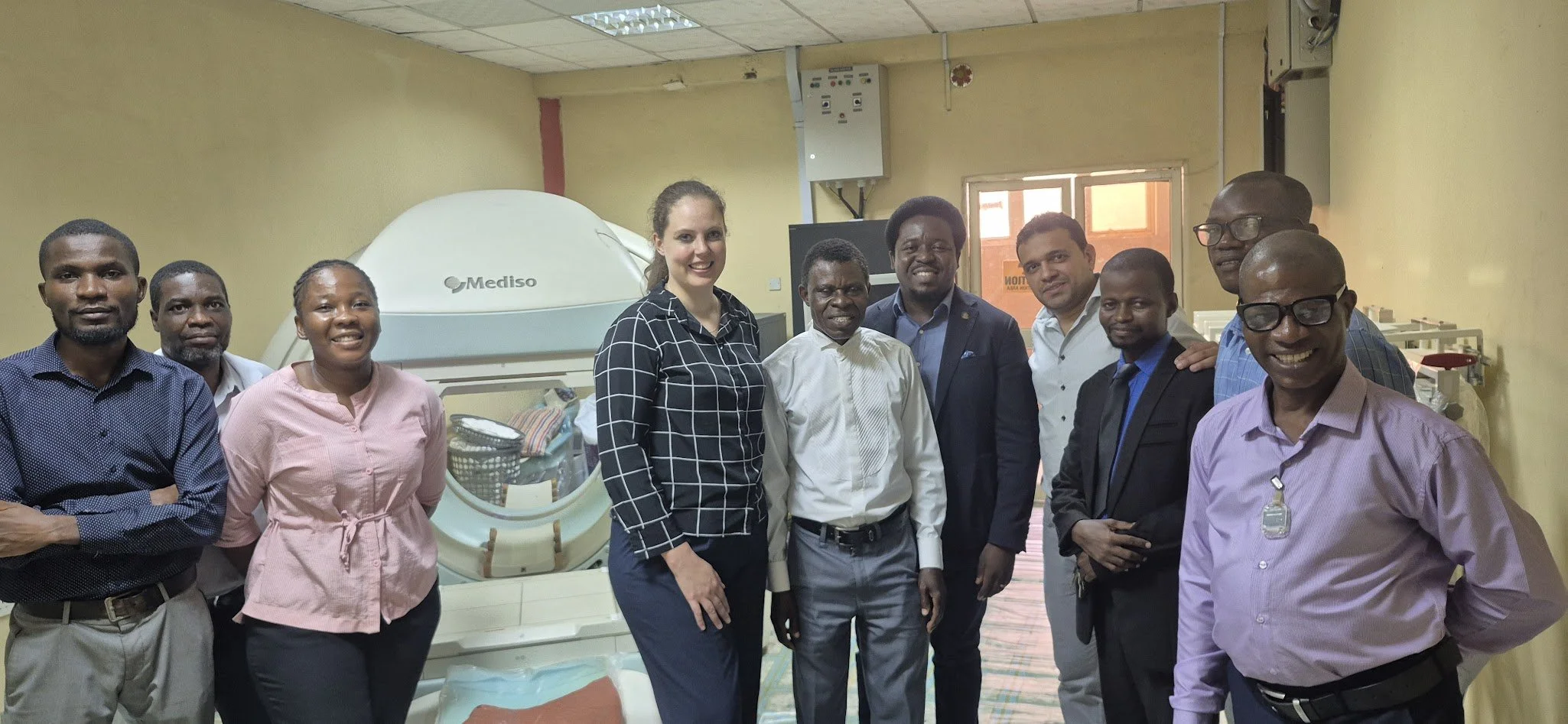
With generous support from the Oncidium Foundation, I had the opportunity to visit the Department of Nuclear Medicine at University College Hospital in Ibadan, Nigeria. Nuclear medicine in Nigeria actually began in Ibadan, with the commissioning of the country’s first centre in 2006. Nearly two decades later, access remains remarkably limited for a country of Nigeria’s size: recent data reported only four SPECT/SPECT/CT systems and two PET/CT systems nationally.
The department in Ibadan is led by Dr Olumayowa Kolade — someone whose ambition and drive to expand nuclear medicine and radiopharmaceutical therapy in Africa very much resonates with my own. Nigeria is an enormous country, and the contrast between its population and its available nuclear medicine infrastructure is difficult to ignore. This is not a challenge unique to Nigeria: across Africa, shortages of infrastructure, radiopharmaceuticals, trained personnel and funding continue to restrict access to nuclear medicine. At the same time, there is clear momentum for growth.
I was joined in Ibadan by Shrief Maher from Egypt, and our visit was deliberately practical. Together with the local team, we prepared three patient doses using materials generously sponsored by the Oncidium Foundation and Femto Trade Co. The training around this was accompanied by lectures covering the development of nuclear medicine and radiopharmaceutical therapy, generator-produced radiopharmaceuticals, and radiation protection and waste management. In particular, we spent time looking at how generator systems — from the familiar molybdenum-99/technetium-99m and germanium-68/gallium-68 generators to future therapeutic generator systems — can help make radiopharmaceuticals available where large-scale production infrastructure is not readily accessible.
What struck me most during this visit, however, was not what the department lacked. It was what they managed to accomplish with what they had. Where infrastructure and resources were limited, the team compensated with enthusiasm, ingenuity and a remarkable ability to solve problems. It is very easy, when working in a well-resourced environment, to start regarding sophisticated equipment and readily available radionuclides as normal. Ibadan was a very good reminder that resources alone do not build a nuclear medicine programme — people do.
In that sense, this visit made me look rather critically at myself. I have access to resources, infrastructure and scientific opportunities that many colleagues elsewhere simply do not have. Am I using them to their absolute maximum? It was an uncomfortable but useful question. I travelled to Nigeria expecting to teach, but I suspect I learnt considerably more from my Nigerian colleagues than they learnt from me.
There is a great deal still to be done. Nigeria has identified expansion of imaging infrastructure, radioligand therapy and specialist training as priorities for the development of nuclear medicine. I very much hope that this was not my last visit to Ibadan. There is something particularly rewarding about working with people who are determined to build — even when the circumstances make building difficult.